Youth Pitch Counts: Why They Matter and How to Prevent Arm Injuries
Do Pitch Counts Really Matter? A Coach's Guide for Parents
Let’s talk about one of the most stressful numbers in youth baseball: the pitch count.
I’ve seen the concerned looks in the stands when a youth pitcher hits that number, and I get it. We are all trying to protect our kids. As a coach who has seen players develop from T-ball all the way to college, let me be clear: Yes, pitch counts absolutely matter. But the number itself is just the starting point—not the full story. This guide is specifically for parents navigating the world of 11U, 12U, 13U, 14U, 15U, and 16U club baseball.
Protecting Young Arms: The Science Behind Pitch Limits
When organizations like USA Baseball and Little League mandated pitch count limits, they did so for a crucial reason: to protect young arms from overuse and injury. This is the core of youth baseball arm care.
Young athletes, especially those between 11U and 16U, are going through major growth spurts. Their bones and tendons—particularly in the elbow and shoulder—are still developing. Throwing a baseball, especially hard and repetitively, puts intense pressure on these young structures.
The pitch count acts like a maximum effort safety gauge. It’s a limit designed to cut down on fatigue, which is the biggest cause of serious baseball throwing injuries like Tommy John surgery. We follow these rules because we are committed to your player's long-term health and preventing youth baseball burnout.
Beyond the Number: Why Quality Beats Quantity
Here is where the conversation needs to go deeper than just counting. If a player throws 50 pitches, were those pitches:
1. Easy-effort fastballs from the stretch against weaker batters?
2. 50 pitches thrown with maximum force (like hard curveballs) in high-pressure innings?
The strain on the arm from Scenario 2 is much, much higher than Scenario 1.
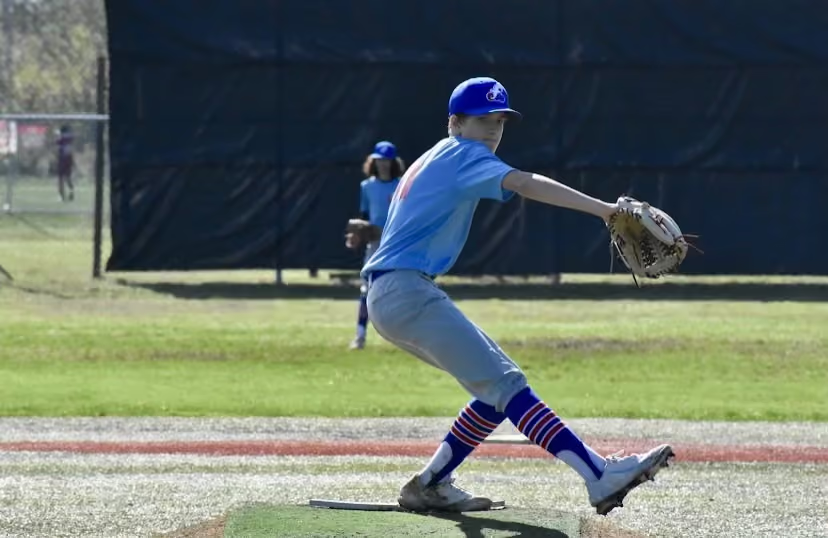
As parents, you need to understand that how hard the pitch is thrown matters as much as the total number. A youth baseball pitcher who has sloppy mechanics, looks tired, or is constantly struggling to throw strikes should likely be pulled before the pitch count limit is reached. Focus on consistent pitching mechanics over brute force.
Three Critical Red Flags for Arm Safety
Don’t just track the digital scoreboard. Here are the three non-negotiable signs that matter more than the official count when evaluating pitcher safety:
· The Velocity Drop: If the player’s fastball starts losing speed or they are struggling to hit their spots, their arm is done for the day.
· The Facial Grimace: Any squinting, rubbing of the elbow/shoulder, or change in their natural movement is an immediate red flag for arm pain in baseball players.
· The Demeanor Shift: Is your typically energetic player quiet and sluggish on the mound? Being mentally tired means the arm is next.
The Takeaway: Partnering for Long-Term Development
At EForce Baseball Academy we follow pitch count rules strictly, and we pair that with mandated rest days and an emphasis on proper mechanics. This is our foundation for baseball arm care.
But your job as a parent is to be an extra layer of defense. If your player is complaining about pain, or if you see the fatigue setting in early, we need to know. Don't worry about hurting the team—you are protecting your player’s future.
Youth pitch counts are essential, but they are a guide, not a final answer. Let’s focus on good movement, proper recovery, and listening to the body, and we will keep these athletes healthy and on the mound for years to come.
Contact EForce Baseball Academy to schedule a pitching evaluation and ensure your athlete is building habits that will keep them healthy for seasons to come.
Email: josh@eforcesports.com