5 Things Coaches Can Do Right Now to Protect the Mental Wellness of Their Players
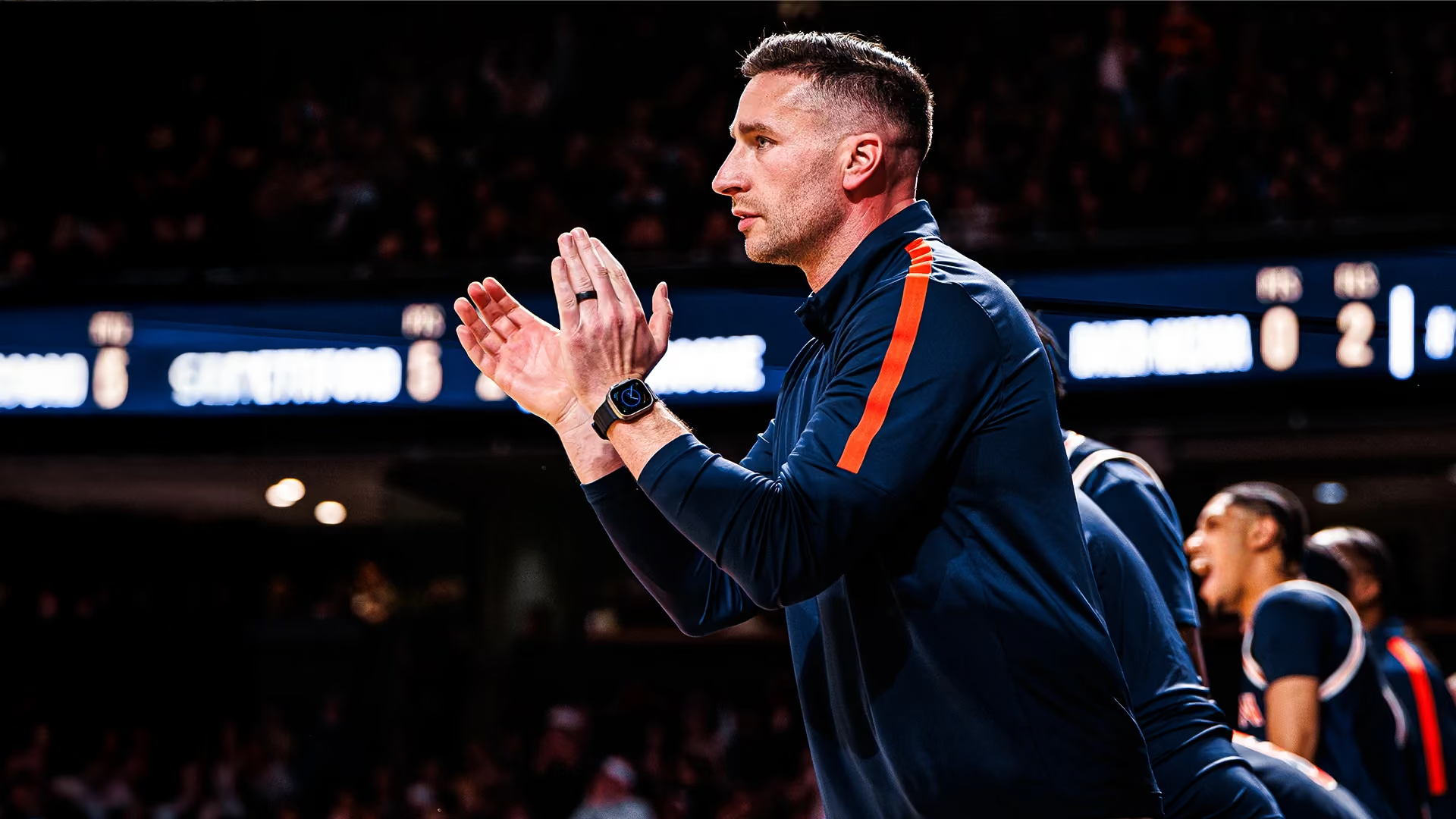
Coaches carry more influence than almost any other adult in a young athlete's life. That's not a responsibility to take lightly. The way you communicate, structure your environment, and respond to struggle shapes how your athletes think about themselves — not just as competitors, but as people.
Mental wellness isn't the team counselor's job alone. It starts on the field, in the weight room, and in the locker room — with you.
Here are five things you can do right now to protect it.
1. Separate performance from worth.
This is the big one. When an athlete makes a mistake, the feedback they receive tells them a lot more than just what they did wrong. It tells them whether their value to you is conditional.
Critique the action. Never the person. "That route was too shallow" lands very differently than "you always do this." One corrects behavior. The other attacks identity. Athletes who feel their worth is tied to performance are far more likely to hide struggle, avoid risk, and spiral under pressure.
2. Normalize struggle — out loud.
If the only time mental health comes up is in a crisis, you've already waited too long. The most protective thing a coach can do is make it normal to not be okay sometimes.
That means talking about mental performance in the same breath as physical performance. It means sharing that hard weeks happen. It means not treating a player's emotional low as a distraction or a weakness. When athletes see their coaches treat struggle as human — not shameful — they stop suffering in silence.
3. Create a culture where asking for help is respected, not punished.
Athletes are paying attention to what happens when someone speaks up. If they watch a teammate open up and get benched, talked about, or quietly pushed to the side — they learn the lesson fast. Keep your mouth shut.
Make help-seeking safe. Acknowledge when athletes show courage by coming to you. Connect them with resources without making it a production. The culture you build around this either opens the door or shuts it.
4. Pay attention to behavioral changes.
You don't need a psychology degree to notice when something's off. Withdrawal from teammates. Drops in effort that don't match the athlete's character. Irritability. Showing up late when they're usually early. Checked out in film when they used to be dialed in.
These are signals. Coaches who notice them — and say something simple like "Hey, I've noticed you haven't seemed like yourself lately. You good?" — can change everything. You don't have to have the answers. You just have to ask the question.
5. Model what you want them to do.
You can't teach mental resilience while crumbling under pressure yourself. You can't ask athletes to admit mistakes if you never own yours. You can't expect them to regulate their emotions if you're flipping out on officials every other possession.
Athletes learn more from watching you than from anything you say. How you handle a tough loss, a bad call, or a player who lets you down — that's the real coaching. Mental wellness starts at the top.
The Bottom Line
Protecting your athletes' mental wellness doesn't require a clinical degree. It requires awareness, consistency, and the willingness to care about the whole person — not just the player.
That's what great coaching has always looked like.
Dr. Drew Brazier is a Sport Psychologist and Mental Performance Director at EForce Sports. He works with athletes and programs to build mental performance into the fabric of training culture.