Is Strength Training Safe for Kids? What Parents of Young Athletes Should Know
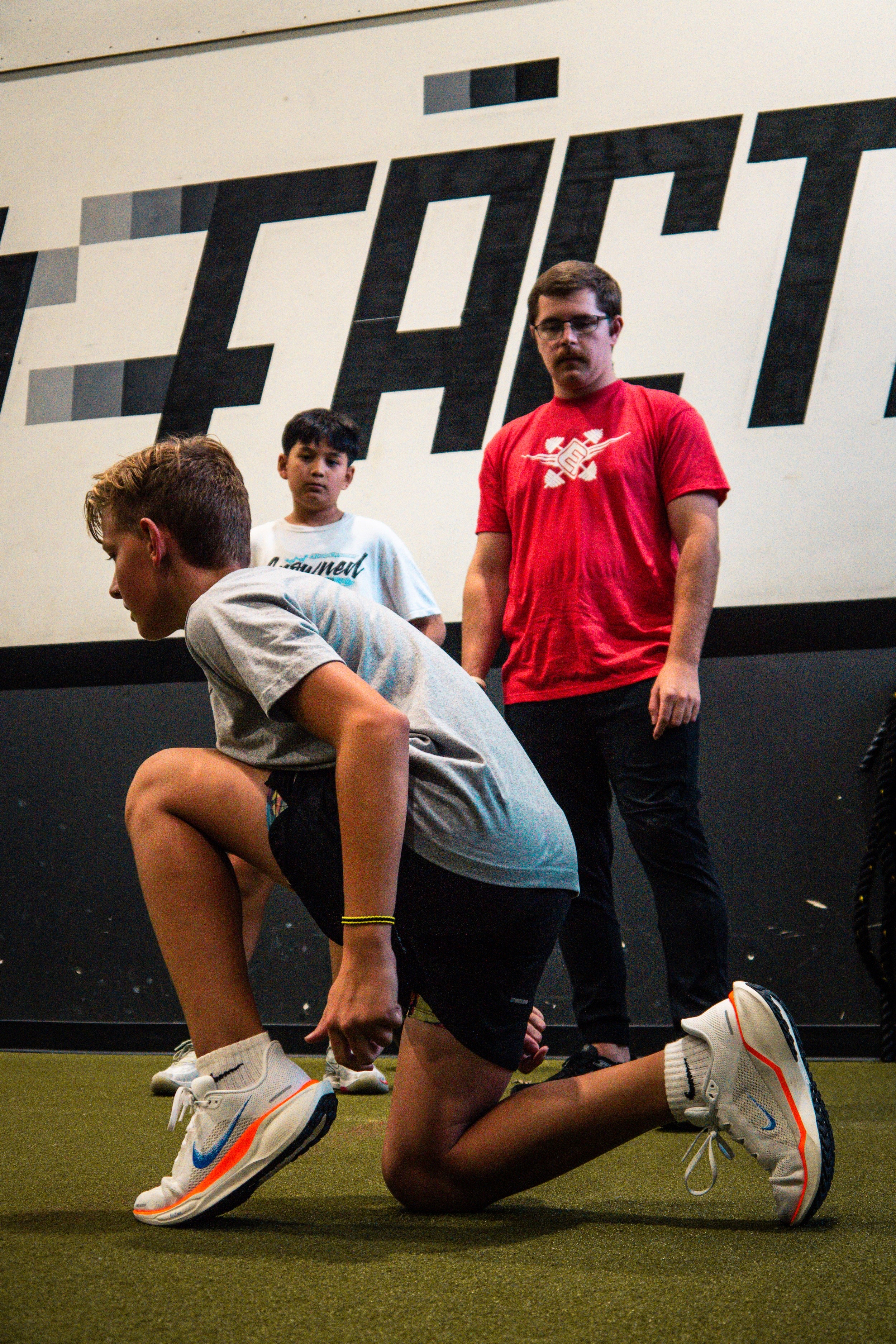
Your 10-year-old wants to get stronger.
Or maybe your 13-year-old baseball player wants more power. Your basketball player wants to jump higher. Your soccer player wants to get faster. Your football player has decided it is finally time to “hit the weights.”
For a lot of parents, that immediately creates another question:
Is my kid actually old enough to strength train?
For years, youth strength training was surrounded by warnings that lifting weights could damage growth plates, stunt growth or simply wasn't appropriate until athletes reached high school.
The research tells a different story.
The American Academy of Pediatrics says children and adolescents can improve strength through properly designed, age-appropriate, resistance training with low injury rates when exercises are performed with proper technique and appropriate supervision. Its clinical report on youth resistance training was reaffirmed in November 2024. American Academy of Pediatrics
But there is an important distinction.
Strength training being safe for young athletes doesn't mean young athletes should train like adults.
That's where good coaching matters.
Strength Training Isn't Just Lifting Heavy Weights
When parents hear strength training, they often picture a teenager underneath a heavily loaded barbell.
That's only one version of resistance training.
Youth strength development can include:
- Bodyweight movements
- Medicine-ball exercises
- Jumps and landing mechanics
- Sprinting
- Resistance bands
- Dumbbells and kettlebells
- Barbells
- Agility and change-of-direction work
The resistance is simply a tool.
The goal is to teach athletes how to produce force, absorb force and control their bodies.
The American Academy of Pediatrics specifically notes that resistance training isn't limited to lifting weights. Bodyweight exercises and other forms of resistance can be introduced at young ages to develop muscular fitness. American Academy of Pediatrics
That changes the question parents should be asking.
Instead of:
"How old should my kid be before they lift weights?"
A better question is:
"Is my athlete ready to learn how to move and train correctly?"
The Goal Isn't to Create the Strongest 11-Year-Old
Youth performance training can go sideways when adults begin chasing adult outcomes with young athletes.
More weight.
More reps.
More workouts.
More specialization.
More intensity.
That's not the point.
At EForce, we think about athletic development as a long game.
The National Strength and Conditioning Association's Long-Term Athletic Development model emphasizes developing fundamental movement skills and foundational strength while recognizing that children mature physically and psychologically at different rates. NSCA
That means two athletes who are both 12 years old might need very different training.
One athlete may be ready to progress a loaded squat.
Another may still need to learn how to squat, hinge, land and decelerate correctly.
The calendar doesn't determine the program. The athlete does.
What Should Young Athletes Actually Learn in the Weight Room?
A good youth performance program should build athletic tools that transfer across sports.
At EForce, that means thinking beyond simply adding weight to a bar.
Here are five areas parents should expect a quality youth strength program to develop.
1. Movement Quality
Can the athlete squat?
Can they hinge at the hips?
Can they stabilize their trunk?
Can they push and pull with control?
Before athletes worry about how much weight they can move, they need to learn how their body should move.
2. Force Production
Running faster, jumping higher, throwing harder and changing direction all require athletes to create force.
Developing strength gives athletes a larger physical foundation from which sport-specific skills can develop.
3. Force Absorption
Athleticism isn't just about creating force.
Athletes also have to handle it.
Think about a basketball player landing after a rebound, a soccer player stopping to change direction or a baseball player decelerating after a sprint.
Teaching athletes how to land, decelerate and control their bodies is an important part of physical development.
4. Coordination
For younger athletes especially, strength gains aren't simply about building bigger muscles.
The AAP notes that strength improvements in children can occur largely through neurological adaptations—the body becoming better at recruiting and coordinating muscle. American Academy of Pediatrics
In simpler terms:
Young athletes can get stronger because they get better at using the body they already have.
5. Training Habits
This may be the most overlooked benefit.
Young athletes can learn how to:
- Warm up properly
- Follow a training plan
- Perform exercises correctly
- Accept coaching
- Track improvement
- Recover between sessions
- Understand the difference between training hard and training recklessly
Those habits can follow an athlete much longer than any number on a weight-room leaderboard.
When Should Kids Start Strength Training?
There isn't one magic birthday.
A better starting point is whether an athlete can listen to coaching, follow directions and perform basic movements with control.
For younger athletes, "strength training" might primarily look like running, jumping, crawling, carrying, throwing medicine balls and mastering bodyweight movements.
As competency improves, resistance can gradually increase.
The AAP recommends beginning exercises with little or no external load until proper technique has been established, then incrementally increasing resistance while maintaining good form. American Academy of Pediatrics
That's a very different model than handing a young athlete a heavy barbell and telling them to see what they can lift.
What Parents Should Look for in a Youth Strength Program
Don't judge a youth performance program by how exhausted the athletes look afterward.
Sweat isn't a development plan.
Instead, watch the coaching.
Are coaches teaching technique?
Are athletes receiving individual feedback?
Are exercises adjusted for different ability levels?
Does resistance increase gradually?
Are athletes learning why they're doing something?
Is training challenging without becoming reckless?
Does the coach understand the athlete's sport and total training schedule?
And maybe most importantly:
Are athletes becoming better movers—not simply better weightlifters?
The NSCA's long-term athletic development guidance emphasizes that youth programs should remain individualized, developmentally appropriate and focused on health and well-being while developing physical fitness. NSCA
That's the standard.
But getting stronger is only part of the equation. The real value comes from how those physical qualities transfer to the field or court. In our next article, we'll break down how strength training supports speed, power, jumping, throwing, change of direction and performance across different sports.
Ready to Start Training?
At EForce Sports, our approach to athletic development combines strength, speed, movement and sport performance while meeting athletes where they are in their development.
Whether your athlete is stepping into performance training for the first time or preparing for the next level of competition, the first step is understanding where they are today.
Explore EForce Sports performance training and find an EForce location near you.