Grit Isn't What You Think It Is
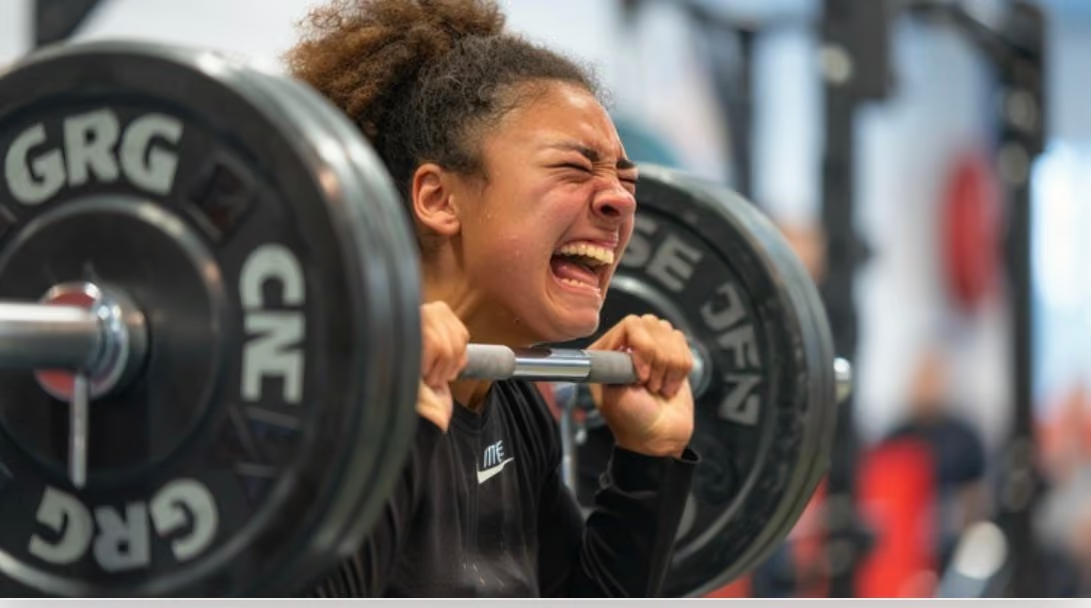
GRIT ISN'T WHATYOU THINK IT IS
The myths holding athletes back, and what actually builds the real thing.
By Dr. Drew Brazier | Mental Performance Director, EForce Sports
Everyone talks about grit. Coaches want it. Scouts look for it. Parents brag about it. And athletes? Athletes get told they either have it or they don't, like it's some genetic lottery you either won or lost.
That's the first problem. And it's a big one.
Grit has become one of the most misunderstood concepts in sports. We throw the word around like it explains everything, "That kid just has grit",but when you dig into what grit actually is and how it's actually built, most of what athletes have been taught doesn't hold up.
So let's clear the air. Here are the biggest myths about grit, the truth behind each one, and the practical tools you can start using right now to build the real thing.
MYTH 01
PUSHING THROUGH PAIN NO MATTER WHAT
MYTH
"Real competitors don't quit. They push through everything. Pain is weakness leaving the body."
THE TRUTH
Grit isn't blind toughness. It's the ability to stay committed to a long-term goal,not just to survive the moment. Athletes who ignore all pain signals don't build grit. They build injuries and burnout.
Angela Duckworth, the researcher who put grit on the map, defines it as passion and perseverance toward long-term goals. Notice what that definition does NOT say: it doesn't say anything about ignoring your body, suppressing your emotions, or grinding yourself into the ground.
True grit looks like an athlete who gets knocked down in the second quarter and still executes their process in the fourth. It looks like a competitor who has a rough week of practice and shows up Monday ready to get better. It's sustained effort over time,not a single moment of toughness porn that coaches love to post on social media.
The practical shift: Stop rewarding suffering for its own sake. Start asking yourself,and your teammates, "Am I pushing because this serves my long-term goal, or am I just white-knuckling it?" That distinction matters.
MYTH 02
YOU EITHER HAVE IT OR YOU DON'T
MYTH
"Some kids are just mentally tough. Others aren't built that way. You can't teach grit."
THE TRUTH
Grit is a trainable skill. It's built through specific experiences, deliberate reflection, and consistent habits, not handed out at birth.
This is the myth that does the most damage, because when athletes believe grit is fixed, they stop trying to build it. Why work on something you think you can't change?
The research is clear: grit can be developed. It grows through challenge, through failure, through recovery, and through building what psychologists call a growth identity, a belief that your qualities, including mental ones, are improvable.
MENTAL SKILLS ARE PERFORMANCE SKILLS. AND PERFORMANCE SKILLS GET TRAINED.
This is why I talk about mental performance the same way I talk about physical performance. You don't tell an athlete "you either have a strong bench press or you don't." You program reps, you track progress, and you build it. Grit works the same way.
MYTH 03
GRIT MEANS NEVER SHOWING EMOTION
MYTH
"Mentally tough athletes stay stone-faced. Showing frustration or doubt is weakness."
THE TRUTH
Emotional suppression and emotional regulation are two completely different things. Gritty athletes feel everything, they've just learned how to use their emotions instead of being run by them.
When athletes are told to "just lock it in" or "stop being emotional," what they actually learn is to bury feelings that don't go away,t hey just go underground. Suppressed frustration doesn't make you tougher. It makes you tighter, less present, and more likely to blow up at the worst moment.
What gritty athletes actually develop is emotional awareness. They know what they're feeling, they know why, and they have a process for moving through it quickly. A missed shot doesn't end their performance, because they've trained their response to that moment, not just their physical reaction to it.
The practical shift: Instead of suppressing emotion, practice acknowledging it and releasing it. A simple reset routine,one breath, one physical cue, one focus word, is far more effective than pretending the feeling isn't there.
MYTH 04
GRIT IS BUILT IN HARD MOMENTS ALONE
MYTH
"You build mental toughness through adversity. Hardship is the only teacher."
THE TRUTH
Adversity creates the opportunity to build grit, but it doesn't build it automatically. Reflection is what turns hard moments into growth.
Here's what most coaches miss: two athletes can go through the exact same brutal experience. One comes out grittier. The other comes out more anxious and avoidant. What's the difference? How they processed it.
Hard experiences without reflection just create more emotional scar tissue. It's the meaning you make from the struggle, the identity you build around it,that actually develops grit. This is why journaling, intentional debrief conversations, and deliberate reflection after adversity aren't soft extras. They're the mechanism.
BUILD IT
5 TOOLS THAT ACTUALLY DEVELOP GRIT
Now that we've cleared out the noise, here's what actually works. These aren't motivational posters. They're trainable habits.
01
DEFINE YOUR "WHY" IN WRITING
Grit requires passion, a long-term goal you actually care about. Write down why your sport matters to you beyond wins and stats. Read it when things get hard. Passion is the engine; everything else is fuel.
02
PRACTICE DELIBERATE RECOVERY
Grit isn't sustainable without recovery. Build a pre-game routine, a post-competition debrief habit, and a daily reset practice. Resilience is a muscle, it needs rest to grow.
03
SEEK CONTROLLED DISCOMFORT
Regularly put yourself in uncomfortable situations where you can practice staying focused. Hard drills, physical challenges, competitive pressure scrimmages. The key word is "controlled", the goal is skill-building, not suffering.
04
REFLECT AFTER HARD MOMENTS
After every tough practice, tough game, or tough week, ask yourself three questions: What happened? What did I learn? What will I do differently? This is how experience becomes growth instead of just memory.
05
BUILD YOUR IDENTITY AROUND EFFORT, NOT OUTCOMES
Gritty athletes don't define themselves by results. They define themselves by how they work. Start saying "I'm someone who shows up and puts in the work", and then prove it every day. Identity drives behavior.
Here's the bottom line: grit isn't a personality trait reserved for a few tough kids. It's a mental skill, and like every other skill, it can be trained, developed, and strengthened over time.
Stop waiting to feel it. Start building it.
MENTAL PERFORMANCE IS TRAINABLE.
Want to build the mental skills that actually move the needle? Follow along for more tools, frameworks, and no-fluff performance content.
Dr. Drew Brazier is a Sport Psychologist and Mental Performance Director at EForce Sports. He works with athletes and programs to build mental performance into the fabric of training culture.